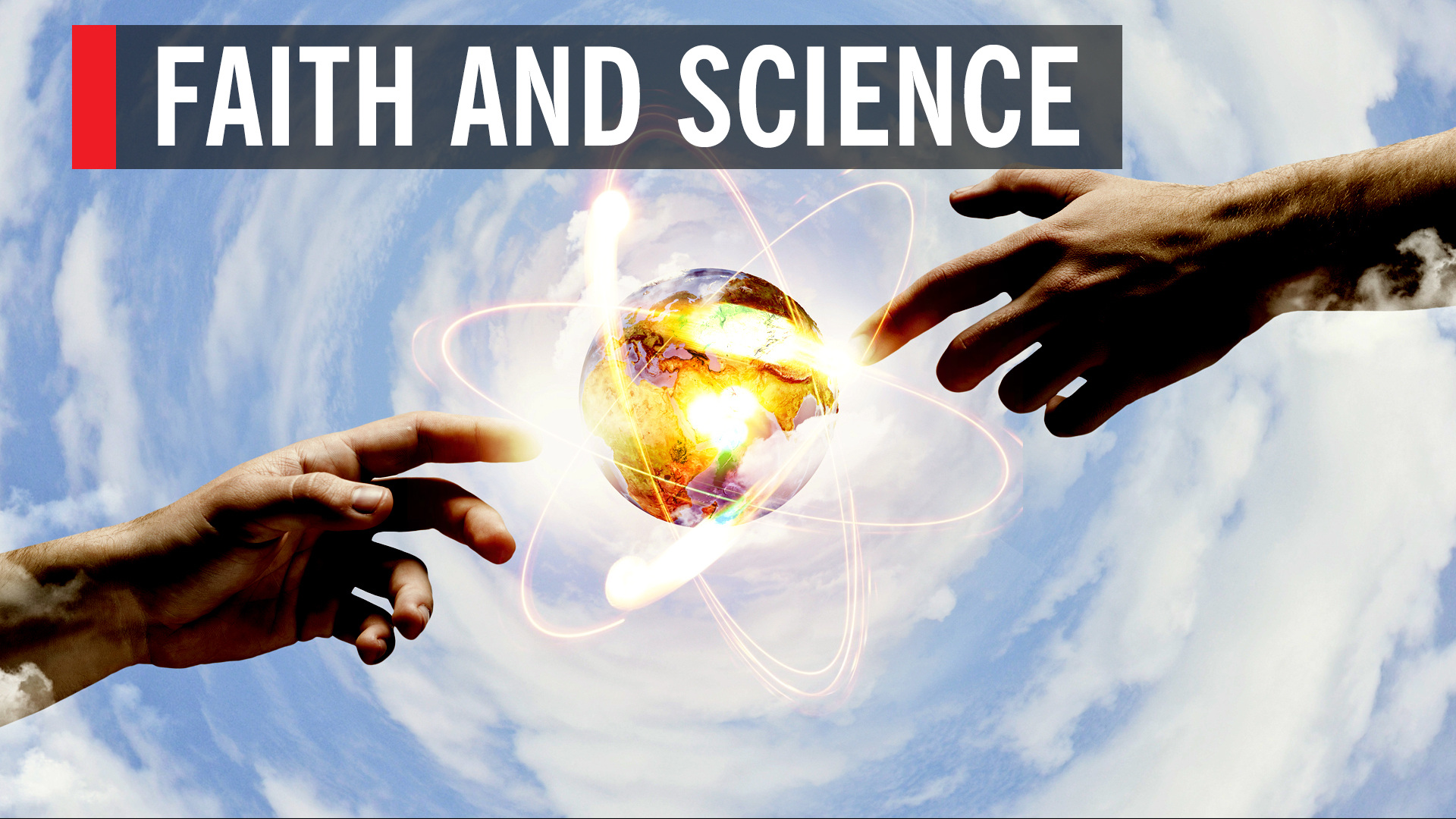
Proving God’s Existence Through Science
The question of God’s existence has intrigued humanity for millennia. While faith provides spiritual assurance, many also turn to reason, observation, and science to explore the evidence of a Creator. Contrary to the idea that science and faith are opposed, science often illuminates the complexity, order, and fine-tuning of the universe—pointing toward intelligent design. While science cannot “prove” God in the same way it proves a chemical reaction, the natural world provides compelling evidence that a Creator exists.
1. The Complexity of the Universe
One of the most striking pieces of evidence for God’s existence is the immense complexity of the universe. From galaxies to subatomic particles, the natural world operates with precise laws that make life possible. Consider the fine-tuning of the universe. The physical constants—such as the gravitational constant, the speed of light, and the strength of the strong nuclear force—are precisely calibrated. Even a slight variation in these constants would render life impossible. Scientists call this the “fine-tuning problem.”
Physicist Paul Davies notes that the odds of these constants aligning by chance are astronomically low, suggesting design rather than randomness. The precise order and predictability of physical laws hint at a rational mind behind the cosmos. Psalm 19:1 echoes this observation: “The heavens declare the glory of God; the skies proclaim the work of his hands.” Science reveals the heavens’ order, while Scripture interprets it as evidence of a Creator.
2. The Origin of Life
Another scientific argument pointing to God involves the origin of life, or abiogenesis. Life is incredibly complex at the molecular level. DNA, for example, stores information like a biological computer program. The sequences of nucleotides encode instructions for building and operating living organisms. To argue that such information arose purely by chance strains credulity.
Dr. Francis Collins, a geneticist and former head of the Human Genome Project, observes that DNA is “a language, a code,” which implies an intelligent source. While science explains the mechanics of evolution, it struggles to fully account for the origin of the first self-replicating molecule. The intricate design of life suggests a designer. Romans 1:20 reinforces this idea: “For since the creation of the world God’s invisible qualities—his eternal power and divine nature—have been clearly seen, being understood from what has been made.”
3. The Complexity of Biological Systems
Biology provides additional evidence for God’s existence through the concept of irreducible complexity. Certain biological systems, such as the human eye, the bacterial flagellum, or the blood clotting cascade, are composed of multiple interdependent parts. Remove one component, and the system ceases to function. Evolutionary mechanisms struggle to explain the sudden appearance of these systems in fully functional form.
Michael Behe, a biochemist, describes the bacterial flagellum as “irreducibly complex.” Its precise engineering suggests purpose, not random assembly. Science shows that life is not only complex but also exquisitely structured to perform specific functions. Such complexity implies a Creator with foresight and intelligence.
4. Cosmology and the Beginning of the Universe
Modern cosmology also points to God’s existence. The Big Bang theory, which describes the origin of the universe, indicates that the universe had a definite beginning. If the universe began from nothing, what caused it? Scientists acknowledge that the Big Bang does not answer the ultimate question: why does anything exist at all?
Philosopher William Lane Craig and others argue from the Kalam Cosmological Argument: everything that begins to exist has a cause; the universe began to exist; therefore, the universe has a cause. This cause, being beyond space and time, aligns with the concept of God. In this way, cosmology supports the idea of a Creator outside of the universe, who initiated its existence.
5. Order, Information, and the Laws of Nature
Science repeatedly reveals that the universe is governed by orderly laws. Physical, chemical, and biological systems consistently follow predictable patterns. Even the language of mathematics—a human discovery—perfectly describes the cosmos. Galileo famously wrote that the universe is “written in the language of mathematics.”
Furthermore, the presence of information, whether in DNA or the fundamental particles, suggests intelligence. Natural processes alone cannot explain the origin of complex information. The laws of nature and the patterns within them indicate design rather than chaos, pointing toward an intelligent Creator.
6. Consciousness and Moral Awareness
Science also provides hints of God’s existence through human consciousness. Neuroscience can study brain activity, but it cannot fully explain subjective experience, free will, or moral awareness. Humans possess an innate sense of right and wrong, a moral compass that transcends survival instincts.
Philosopher C.S. Lewis argued that moral law implies a Moral Lawgiver. Evolutionary explanations struggle to account for the depth of human moral intuition. The presence of consciousness, morality, and purpose in humanity suggests that life is more than mere material existence—it reflects God’s image.
Conclusion
Science and faith are not enemies; rather, science often deepens our awe of God. The complexity and fine-tuning of the universe, the origin and intricate design of life, the predictable laws of nature, and the mystery of human consciousness all point toward an intelligent Creator. While science can describe the “how” of the universe, it also illuminates the “why,” suggesting that a purposeful God underlies reality.
Psalm 8:3–4 captures the wonder of creation: “When I consider your heavens, the work of your fingers, the moon and the stars, which you have set in place, what is mankind that you are mindful of them?” Scientific discoveries amplify this wonder, leading many to see the fingerprints of God throughout